
- Deliverability and diagnostics
dmarcian: check SPF, DKIM and DMARC, then monitor your reports over time
Good tool
dmarcian covers two quite different needs. On one side, a set of free tools, no sign-up required, that tell you in seconds whether a domain’s SPF, DKIM and DMARC records are in place and written correctly. On the other, a paid platform that receives the DMARC reports sent by the major mailbox providers, turns them into readable dashboards and helps you spot who is sending email on behalf of your domain. A specialist in the field from day one, it is one of the names that comes up most often when a company wants to move its DMARC policy to enforcement without blocking its own mail.
What is dmarcian?
To understand the platform, start with how DMARC works. Once the record is published in the DNS zone, Gmail, Yahoo, Microsoft and other mailbox providers send aggregate reports in XML format to the specified address every day: which IP addresses sent mail on behalf of the domain, how many messages, and whether SPF or DKIM passed while staying aligned with the domain in the From address, a condition without which DMARC fails even when the signature is valid. Unreadable to the naked eye, these files become dashboards on dmarcian, where each sender is grouped by named “source” (Microsoft 365, Mailchimp, a billing tool…) rather than by IP address. That shows what is legitimate, what is misconfigured and what is spoofing, before tightening the policy from none to quarantine and then to reject. Higher plans add forensic reports (anonymized copies of failing messages, which major providers such as Gmail and Microsoft don’t send, however), alerts, TLS reports, BIMI, an API and single sign-on.
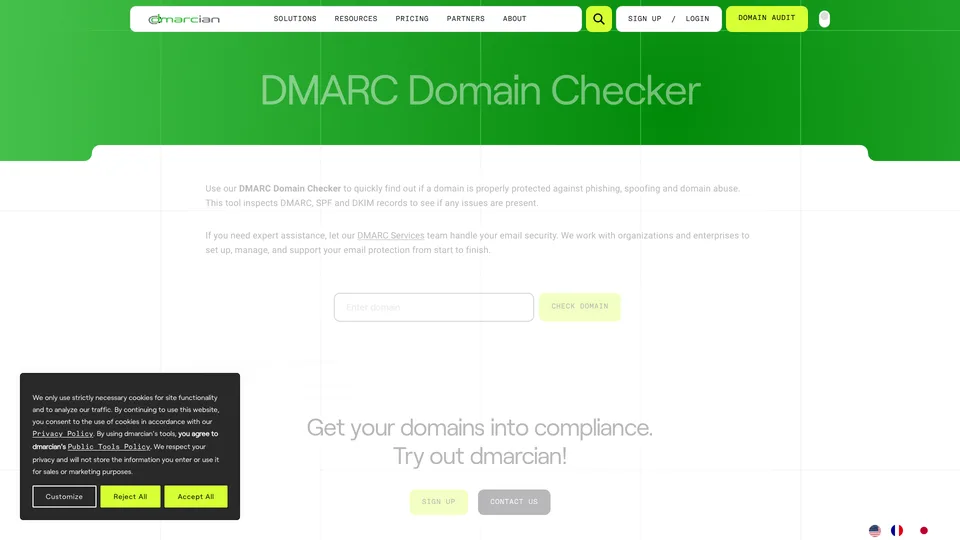
Alongside the platform, the site offers about ten free tools that work without an account: an overall domain check, DMARC, SPF and DKIM inspectors, a wizard that writes the DMARC record, a converter that makes manually uploaded XML reports readable, BIMI tools and an email header analyzer.
The company was founded in the United States in 2012 by Tim Draegen, whom dmarcian presents as one of the main authors of the DMARC specification. Self-funded and a certified B Corp since 2019, it also publishes a free online course, the DMARC Academy, and takes part in industry working groups, including the IETF’s DMARC group. European customers have an instance hosted in Europe, at eu.dmarcian.com; the dmarcian.eu domain, held by a former Dutch partner whose license was revoked in 2021, is no longer an official site and is the subject of a dispute.
dmarcian at a glance
- Type
- Free online tools and SaaS platform
- Founded
- 2012
- Founder
- Tim Draegen
- Origin
- United States
- Company
- dmarcian, Inc. (North Carolina)
- Funding
- Self-funded, certified B Corp
- Free plan
- Checking tools; monitoring limited to personal domains
- Trial
- 30 days, no credit card
- Starting price
- $19.99/month billed annually
What is dmarcian used for?
-
Check SPF, DKIM and DMARC
the Domain Checker and the free inspectors review your records and flag every error, without creating an account.
-
Read your DMARC reports
the XML files sent by mailbox providers are aggregated and shown as tables, by sender and by authentication result.
-
See who sends on your behalf
each sending service is recognized by name, which lets you tell your legitimate tools apart from spoofing attempts.
-
Get alerted when things drift
alerts flag a new sender, a drop in compliance rate or a changed record.
-
Show your logo with BIMI
tools to write the BIMI record and check your logo’s SVG file; Gmail and Apple Mail only display it with a paid VMC or CMC certificate and a DMARC policy already at quarantine or reject.
-
Connect the platform to your tools
the Enterprise plan opens up API access and single sign-on for IT teams.


dmarcian review
Good tool
The free tools come first. Fast, accurate and backed by clear explanations, they are among the best for checking that a domain is properly authenticated or for writing a first DMARC record. The XML report converter in particular is a real help for anyone who receives these files without knowing what to do with them.
The monitoring platform calls for a more nuanced verdict. On substance, there is nothing to fault: the data comes straight from the reports sent by mailbox providers, identifying sending services saves a lot of time, and dmarcian knows DMARC better than anyone. It does assume you know what you are looking for, though, since the interface is still an admin’s tool, not an assistant that walks you through every step.
The main criticism concerns the pricing policy. Free monitoring, long appreciated, is now limited to personal domains: a business domain on a free account eventually expires, and you have to move to a paid plan. The entry-level plan stays affordable, but it is capped at two domains; as soon as a small business manages more, the next tier costs almost ten times as much. For an MSP or a large organization, the investment makes sense; for a small company, it is worth comparing.
Strengths
- Free checking tools, no sign-up required, among the most complete and best explained.
- A free converter that finally makes XML DMARC reports readable.
- Senders recognized by name, not just listed by IP address.
- Leading expertise on DMARC, with a free course to learn the ropes.
- A 30-day trial with no credit card and an instance hosted in Europe.
Weaknesses
- Free monitoring limited to personal domains, with business accounts expiring.
- A Basic plan capped at two domains and three months of history.
- A very steep price jump between Basic and Plus.
- An interface built for admins, with little guidance for beginners.
- Possible confusion with the former dmarcian.eu site.
Is dmarcian worth it?
Yes, if you need to bring one or more business domains to a strict DMARC policy, with many services sending on your behalf: that is exactly the job the platform was built for, and IT teams as well as service providers managing several clients will get their money’s worth. The free tools, for their part, are worth a look for everyone.
Not necessarily, if you just want to check a configuration now and then: dmarcian’s free tools, Mail-tester or learndmarc.com are enough for a one-off check, with no subscription. For ongoing monitoring, EasyDMARC is the alternative most often weighed against it: its entry plan has the same limits (two domains, 100,000 emails a month, three months of history), which makes it a direct comparison on price and usability. And to monitor your domain’s reputation with Gmail, Google Postmaster Tools is still free.
For one or two business domains, two free options are also worth trying before any subscription: the DMARC management built into Cloudflare, if your DNS zone is hosted there, and the weekly DMARC report digests offered by Postmark. They have neither dmarcian’s sender identification nor its history, but they are often enough to take a small domain to quarantine and then to reject.
How much does dmarcian cost?
Pricing is based on the number of active domains and on the volume of legitimate messages reported by DMARC reports, not counting fraudulent traffic. Prices are shown in US dollars, with a monthly subscription or a discount for annual billing. The Personal plan is still free, but only for non-commercial domains.
| Plan | Per month | Per month, billed yearly | Domains and volume | Who it's for |
|---|---|---|---|---|
| Personal | $0 | — | 2 domains, 1,250 messages a month, 1 month of history | Personal domain, non-commercial use |
| Basic | $24 | $19.99 | 2 domains, 100,000 messages a month, 3 months of history | Small business with one main domain |
| Plus | $240 | $199 | 8 domains, 1 million messages a month, 1 year of history, 3 users | Small and midsize businesses with several sending services |
| Enterprise | $600 | $499 | 15 domains, 5 million messages a month, unlimited history, API | Large organizations, multiple teams |
| Custom | Custom pricing | Custom | High volumes, service providers | |
Source: official dmarcian pricing page, checked on October 31, 2026.
- 30-day free trial on Basic, Plus and Enterprise, no credit card required.
- Prices are shown in dollars; dmarcian states parity with the euro on its European instance, and can bill the Plus and Enterprise plans in euros on request.
- Inactive domains (parked or reserved) are not counted.
- Special pricing for partners, nonprofits, government and education, and discounts for multi-year terms.
FAQ
Answers to questions about dmarcian
Is dmarcian free?
Its checking tools (SPF, DKIM, DMARC, BIMI, XML report converter) are free and require no sign-up. Report monitoring is only free with the Personal plan, which is limited to non-commercial domains: two domains and 1,250 messages a month at most.
Can I use the free account for my company’s domain?
No. dmarcian regularly reviews Personal accounts and expires those that carry a business domain. The data can then be kept by moving to a paid plan, starting at $19.99 a month billed annually.
How is it different from Mail-tester?
Mail-tester analyzes one email you send it, at a given moment. dmarcian uses the DMARC reports sent every day by mailbox providers, which shows over time all the mail sent on behalf of your domain, including by third parties.
Is dmarcian.eu the official site?
No. That domain stayed in the hands of a former Dutch partner whose license was revoked in 2021. European customers sign in to dmarcian’s European instance, eu.dmarcian.com.
Information checked on October 31, 2026